
Powerful Archery Aim & Release Methods for Precision
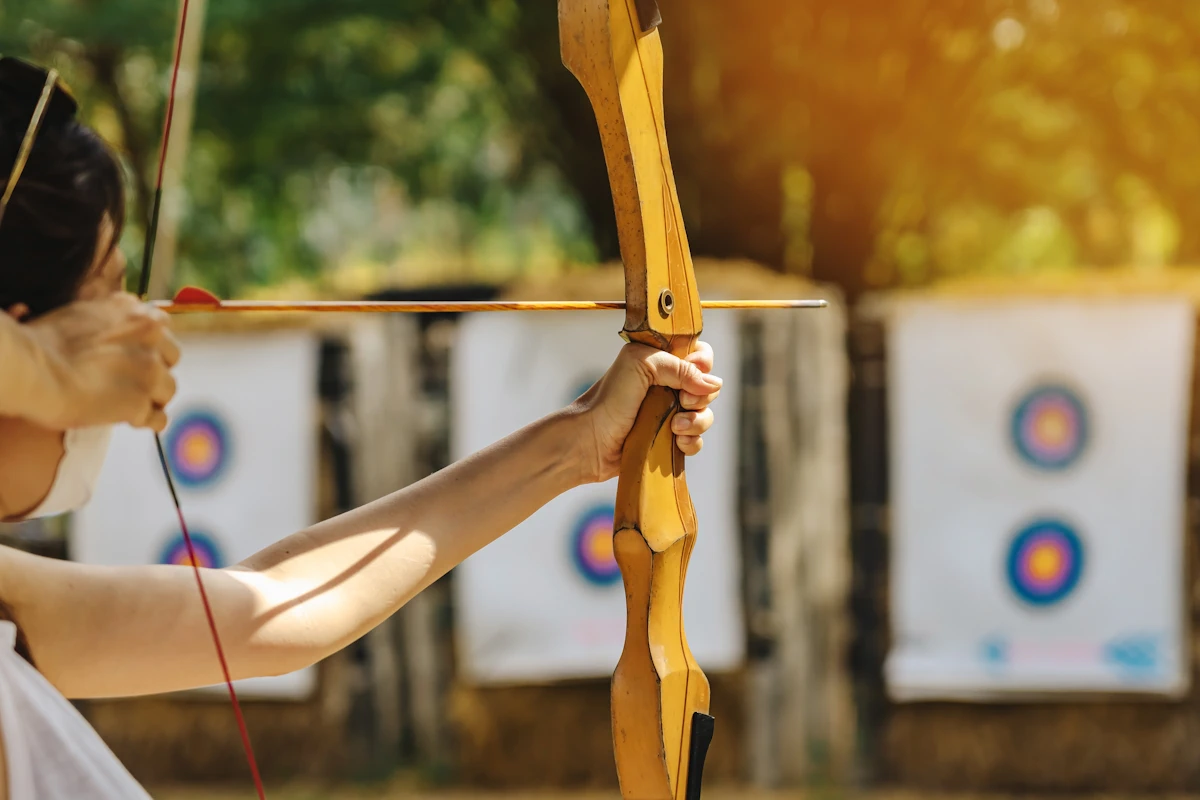
Aiming and releasing the arrow may look like the final step in archery, but it’s where everything comes together. The focus, the posture, the gear, and your inner calm. This is where precision is born. Whether you’re using traditional instinct or a bow tricked out with all the sights, your aim and release define where that arrow lands.
Mastering this part of your shot calls for more than mechanics. It’s about muscle memory, mental clarity, and trusting the process.
Understand Types of Aiming
There’s no one-size-fits-all when it comes to aiming. Here are the most common techniques:
- Instinctive Aiming: You don’t use a sight—just your eyes, experience, and intuition. It’s all about feeling where the arrow will go.
- Gap Shooting: Still sightless, but more calculated. You mentally adjust for elevation and distance by aiming above or below the target.
- Sighted Aiming: Ideal for beginners. Mechanical sights and pins offer clear visual markers for aligning your shot.
Start with what works for your bow and comfort level. If you’re using a compound bow, sighted aiming with peep sights and pins will give you early wins. If you’re drawn to traditional or barebow archery, the challenge and artistry of instinctive or gap shooting may call your name later on.
Archery Sights
Beginner use of sights often accelerates learning and reduces frustrations.
For compound shooters, sight pins and peep sights are your aiming toolkit.
A peep sight (a tiny aperture on the string) lines up your eye with the front sight pins, which correspond to different target distances.
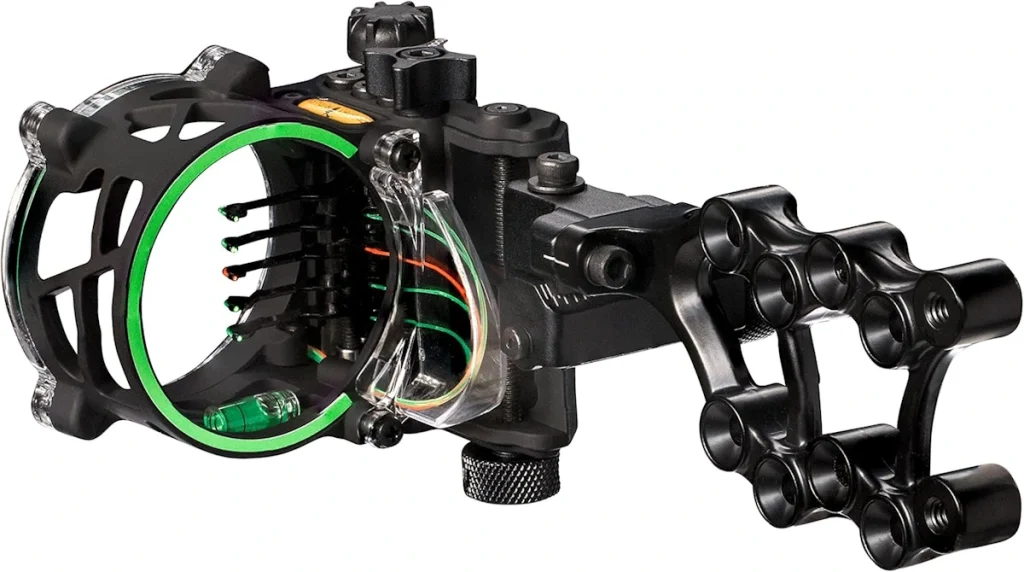
Start by:
- Practicing at fixed ranges like 7, 20, and 30 yards.
- Adjusting individual pins to match your arrow’s impact.
- Learning to fine-tune based on how your arrow behaves at various distances.
With time, you’ll build confidence adjusting your sights mid-session, allowing for more versatility and control.
Anchor Consistency Influences Aim
Your anchor point is where you draw your string or release aid each time. It is a specific location on your face, such as the corner of your mouth, jaw, or chin. Your goal is to find a spot that can be precisely duplicated every shot.
Use multiple contact points (e.g., finger on the jawbone, string on the nose) to enhance consistency further. Alignment is crucial. The anchor point should align with the target, the draw elbow, the shoulders, and the bow hand.
Which is BEST, the Side or Front Anchor when shooting a recurve or long bow? Each has its downfall and limitations that can be easily fixed with a slight modification as explained by a pro who knows, Jake Kaminski, 2X silver medalist archer.
If your anchor changes even a little, your aim does too. That means wider groupings and inconsistent shots. Practicing a reliable, repeatable anchor point builds stability into every shot.
Think of it as your compass—a quiet reminder to trust your form.
Smooth and Controlled Release
The way you release the string affects the arrow’s path more than you might expect.
- Compound bows often use mechanical release aids for a clean break with minimal string torque.
- Recurve or traditional archers release with fingers, requiring extra control to avoid flinching or twisting the string.
The key? Relax into the release. Don’t “let go”—flow through it. Like letting a balloon string slip between your fingers rather than snapping it away.
Follow Visual and Physical Cue Integration
Aiming isn’t just about your eye, it’s about everything working in harmony. From how your hand holds the bow, to how your torso aligns, to how you breathe.
This is where mindfulness and muscle memory meet:
- Stay aware of your alignment.
- Let your vision guide your body’s response.
- Feel when the shot “clicks” into place before you breathe and release.
That blend of sight + body + calm intention leads to a natural rhythm and synergy that only grows with practice.
Great aiming isn’t a trick—it’s a practice.
Aiming is a practice built on repetition, small wins, and tuning in to your movement and breath. Whether you shoot instinctively or through the lens of a peep sight, your style will grow with you.
Keep showing up. Keep watching. Keep refining.
The arrows will follow.